How to place stones properly: where to leave them and how to treat them
Stone placing (also called stone hiding) has changed a lot since the Middle Ages. Stones are no longer thrown at anyone; they are placed in a visible spot or passed from hand to hand to make someone happy.
Where to put a stone
Ideal places are where many people meet but the stone is not at risk:
- a bench in front of a school or in a park,
- a bus or train stop,
- a geocaching box (cache),
- a viewpoint, signpost or spring,
- the entrance of a library or café, where the owner allows it.
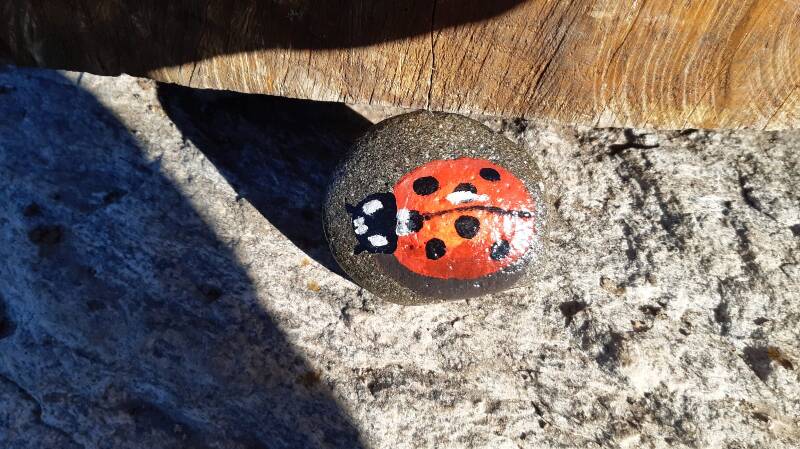
Where not to put a stone
- on lawns and meadows, where a mower could hit it,
- on historical monuments, statues, graves and memorials,
- in protected areas and in nature where a stone doesn't belong,
- on roads and crossings, where someone could slip,
- in places where damage is likely, for example from dogs, rain or mud.
Rules of good stone placing
- Register and label the stone. Without a code nobody knows about its journey. You will find the guide in the painting section.
- Photograph it before you put it down, and add the first chapter of the story with its location straight away.
- Don't damage anything that isn't yours. Don't glue, don't write, don't drill. A stone is placed, never attached.
- Don't publish the secret code in photos. The code protects the story from spam: anyone who can't see it on the back can't write comments.
- Make room. If the stone is in the way of something, please move it after being asked.
What if you find a stone?
On the back of the stone there is a secret unique code. With it you can add information about where you found the stone, and a photo of it too. You also learn more about its story, can share it on social networks and subscribe to follow its further journey. You then get an e-mail with every new find.
A stone can only be logged if you know the secret code. If you want to add a comment after you have put the stone down, remember or write down the code. A detailed guide for finders can be found on its own page.
Everyone writes the stone's story
Every finder adds one chapter to the story: a place, a photo and a few words. In this way the stone gets a story it could never have made up itself. Try writing what you felt when you picked it up, or where you will send it. The best chapters are the ones that make the next finder want to carry on.